What Google's I/O 2026 AI Announcement Means for SEO
BLOG
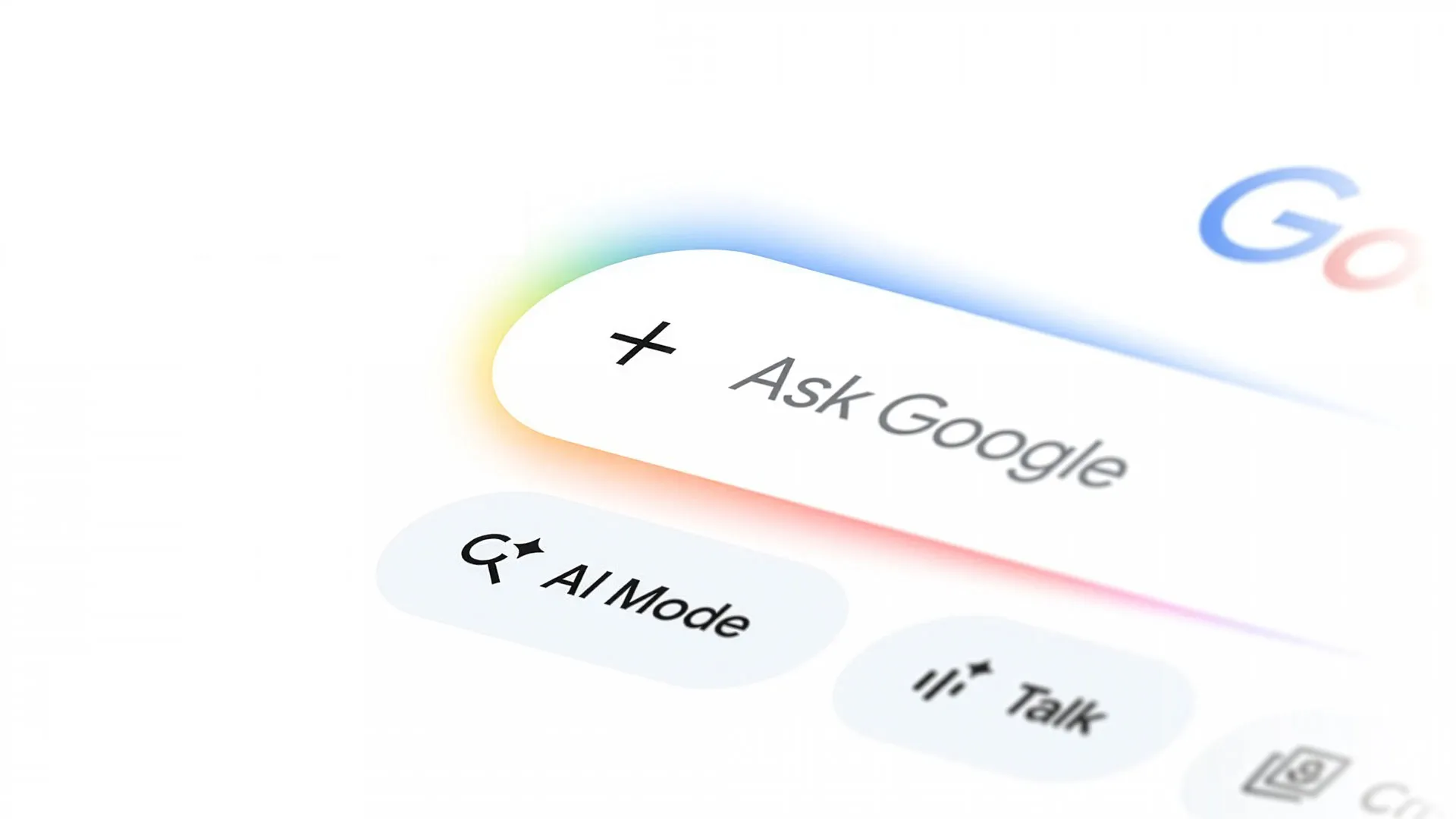
Google has been building something that looks less and less like a search engine. At I/O 2026, the company announced it is rebuilding the search box from scratch for the first time in 25 years. AI Mode, which replaces the traditional results page with a Gemini-powered chat interface, has reached one billion monthly users, with queries doubling every quarter. As Time reported this month, Google is the gateway to most of the internet's commercial activity. What it builds, businesses have to adapt to.
For anyone running a website and tracking organic traffic, the numbers behind Google's AI search shift are worth reading plainly. Some of them are alarming. Some of them are not. The distinction matters.
What Happened
Two products are driving the change. AI Overviews, which launched broadly in 2024, place a generated summary above organic results before the ten blue links appear. AI Mode goes further, removing those links entirely and answering queries in a conversation-style interface with citations attached. Most sessions in AI Mode end without a single click to an external website.
The I/O 2026 announcements went further still. Autocomplete is being replaced by intent prediction. Google is building what it calls Information Agents: background processes that monitor apartment listings, price movements, and product drops on a user's behalf, without the user needing to type a new query. The model being built is closer to a personal AI monitor than a search engine.
Why This Matters
The click data from early 2026 studies is stark. A field study by Search Engine Journal found AI Overviews reduce organic clicks by 38% on the queries where they trigger. Other estimates put that figure closer to 47%. Position 1 CTR has dropped from roughly 27% to as low as 11% on AI-heavy results pages. In AI Mode specifically, 93% of searches end without any click to an external site. Zero-click searches now account for 58.5% of all US Google searches.
The content taking the hardest losses is informational. Evergreen how-to guides, definitions, and explainers — content designed to answer a question cleanly — are most likely to be resolved inside Google's interface without anyone visiting the source. A well-ranked post titled "how to brief a web designer" may now deliver its answer entirely inside an AI Overview. The ranking holds; the traffic does not.
Transactional and ecommerce queries are more protected. AI Overviews appear on roughly 4% of ecommerce searches. Queries where the person needs to click somewhere to act, to buy a product, book a service, or find a local business, are less likely to be absorbed into a generated answer because the intent requires a destination.
For paid search, the picture is also shifting. CPCs are rising as total click volume falls and spend consolidates on transactional terms. Ads are now appearing inside AI Overviews and AI Mode through Performance Max and Shopping campaigns, so the inventory is moving rather than disappearing. Manual bidding controls are narrowing as Google's automation takes over more placement decisions.
What You Can Do About It
The practical response breaks into content, technical structure, and paid search.
For content, the shift is from ranking to being cited. A page can rank in the top 10 without appearing in an AI Overview; another page can be cited in an AI Overview without ranking in the traditional top 10. Getting cited drives more clicks than ranking first without a citation, on AI-heavy results pages. What Google cites is content with genuine, specific expertise: named observations, original process knowledge, and detail that could not be synthesised from other public sources. A shorter post with a practitioner's real perspective on a specific decision will outperform a comprehensive guide covering the same territory as every other comprehensive guide.
For technical structure, clean markup matters more than it used to. Title tags, clear heading hierarchy, precise metadata, and fast load times all help Google's crawlers parse and trust your content as a citation source. This is not new advice; it now has sharper consequences if it is not followed.
For paid search, the practical direction from practitioners tracking these changes is to focus budget on high-intent terms, optimise for conversion efficiency rather than traffic volume, and test Performance Max and AI Max for Search campaigns if you have not already. That is where Google is routing its development.
The Game Has Not Changed as Much as It Looks
Here is the part that gets lost in most coverage of this shift. Google has always rewarded the same things: genuine expertise, topical authority, technical quality, and content that earns trust. The interface has changed substantially, but the underlying quality signals have not shifted.
Sites that ranked well because they published genuinely useful, experience-grounded content are the sites most likely to be cited in AI Overviews. Google's citation engine draws from the same authoritative sources its ranking algorithm already preferred. E-E-A-T, Experience, Expertise, Authoritativeness, Trustworthiness, is not a concept invented for the AI era. It was the framework Google used to evaluate content quality before AI Overviews existed, and it remains the framework now.
What the AI shift has done is make the cost of thin content visible earlier. Pages that ranked on volume and internal links are easier to displace. Pages that ranked because they contained real, specific knowledge about a real topic are holding up and being cited. If your site was built on substantive, well-structured content, the adaptation required is mostly technical hygiene rather than a content overhaul.
The businesses with the most to address are those whose organic strategy was built on informational volume: large blogs of broad how-to content with thin individual treatment of each topic. For everyone else, the adjustment is incremental. Google is changing how it surfaces answers. It is still looking for the same quality of answer it always looked for.
If your site's organic performance has shifted this year and you want to understand what is driving it, South Design builds websites with SEO infrastructure included as standard. Get in touch or read more about how we approach web design for South African businesses.