The Stormers New Logo: How to Update a Brand
BLOG
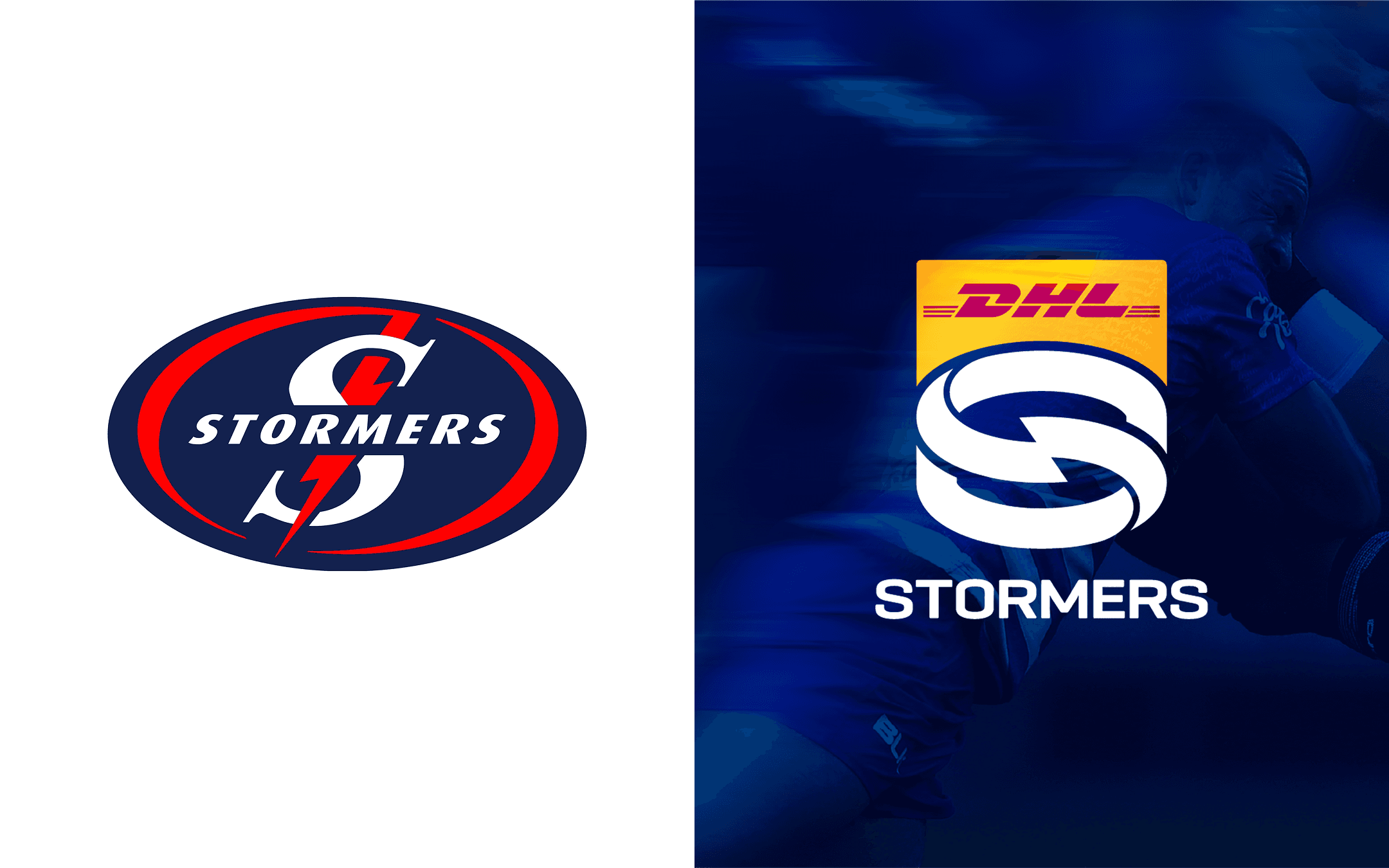
The Stormers hadn't changed their badge since 1999. In March 2025, they did. Within hours, social media had a name for it: the washing machine drum.
That reaction was immediate, loud, and largely beside the point. If you use week-one commentary as your measure of whether a logo update landed, you will misread almost every significant rebrand you encounter.
The Stormers case is a useful study in how to update your logo when your organisation has genuinely outgrown its original mark.
Why 26 Years Was Long Enough
By 2025, the gap between the 1999 badge and the club it represented had become substantial. In those 26 years, the Stormers had come close to bankruptcy, survived, and won a URC title. They had averaged the highest ground attendance in the competition. They had sold out two league fixtures, the first time in the club's history. They had turned a profit for the first time since 2017.
A badge designed for a very different version of the club was being asked to represent something it was never built for.
Visual identities age badly when the organisation changes and the mark does not. The typeface looking dated is a symptom of that; rarely the cause. The logo keeps telling the older story while the business moves on.
The longer a mark has been in consistent use, the more invisible that gap becomes. The people inside the organisation can see the divergence. Audiences who engage with the brand at the surface often cannot, until you make the change and they are forced to look.
What the Redesign Got Right
The new badge attracted criticism partly because it avoided the path most sports clubs take. Contemporary rebrands in professional sport tend toward clean, geometric minimalism: strip the specific detail, simplify the shapes, make the mark work at any size. The result, repeated across dozens of clubs, is a visual identity that feels current and interchangeable.
The Stormers went in the opposite direction. The redesign incorporates the jersey hoops, the lightning bolt, and the stadium shape into a single unified form, developed with fan input. Each element points to something specific about the club: its playing culture, its history, its ground.
Involving supporters in the development process was a considered decision. When the people with the strongest attachment to a mark have some role in shaping what replaces it, the transition from old to new moves faster. It also produces a design that is accountable to the community, not only to the brief.
Marks with that level of layered meaning are harder to read on first encounter. They require context that new marks have not yet had time to accumulate. The washing machine comparison comes from encountering the shape without that context. In three seasons, when the badge has appeared on enough shirts and in enough stadiums, the association will shift. Supporters will only see the Stormers.
Why Week-One Backlash Is a Poor Signal
There is a consistent pattern across rebrands that face public criticism: the people who dislike the change say so immediately and at volume, while those who accept it say nothing. The vocal group is not representative. It is self-selecting.
The Gap logo reversal in 2010 is regularly cited as an example of public opinion correctly overruling a poor design decision. That case had different conditions. The Gap change had no strategic grounding beneath it. The company had not shifted direction, launched anything new, or signalled any change in who they were. A new visual was asked to carry the work of a strategic shift that had not happened.
The Stormers situation has a different structure. There is a real story beneath the update, and 26 years of genuine organisational change to account for. When a logo rebrand has that kind of grounding, week-one reactions from the loudest section of the fanbase are a particularly unreliable measure.
Compare this to the Tropicana redesign in 2009. Sales fell 20% in six weeks because consumers could no longer identify the product at point of sale. Initial commentary on the design was almost incidental. The failure came from removing the image shoppers had been reaching for. The mechanism is completely different from the Stormers situation, and it is worth keeping those two failure modes distinct.
When to Update Your Logo
A visual identity needs updating when the organisation it was built for no longer matches the one that exists today. Aesthetics getting dated is a symptom of that divergence; it is rarely the core problem.
The secondary question is how. Updating a logo to track visual trends will produce work that needs redoing in five years. Updating it to reflect the actual story of the business, what it has become, who it serves, what it now stands for, produces work that can hold for the next decade.
The most honest version of that process usually surfaces a single question: does this mark reflect the business we have now, or the business we were when we designed it? For many companies the answer is the latter, and they have been quietly explaining that gap to every new client who encounters the brand.
If you are asking whether your current branding still fits, South's identity and web work gives a sense of what that process can produce.